
Eye Exams for Every Age
More Than a Prescription
Comprehensive Eye Exams in Centennial
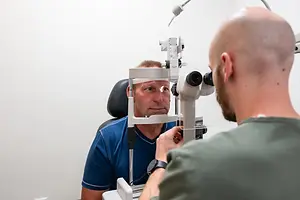
Your eye exam at Hamilton Vision Center is medical, not a quick script check. Our eye doctors look at how you see and how healthy your eyes are, using advanced imaging to catch problems early. It is the foundation of your long-term eye health.
Why a Medical Eye Exam Is Important
Our Centennial optometrists check your vision and update your prescription, then go further. We measure eye pressure, screen for glaucoma, and examine the retina and optic nerve for early signs of disease. Because many eye conditions have no symptoms until they are advanced, an exam matters even when your vision feels fine. A typical visit takes 30 to 60 minutes, and we let you know if dilation or imaging is part of your exam so you can plan your day.
Diagnostics Built Into Every Exam
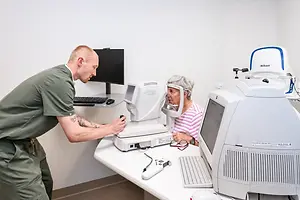
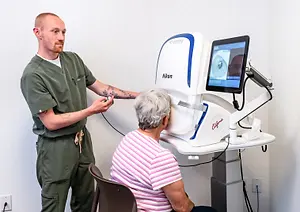
Advanced imaging is standard here, not an upsell. We use OCT to see beneath the surface of your retina, digital retinal imaging, and visual field testing. You see your own results on screen, so you understand your eye health.
What Our Eye Doctors Check During Your Exam
- Visual acuity and updated eyeglass or contact lens prescription
- Eye pressure measurement and glaucoma risk screening
- Retina and optic nerve health, evaluated with advanced imaging
- OCT (optical coherence tomography) to see beneath the retinal surface
- Visual field testing to detect peripheral vision loss
- Anterior segment exam (cornea, lens, and iris)
- Digital eye strain and screen-related symptoms
- Signs of dry eye, ocular surface disease, and oil gland (meibomian gland) dysfunction
- Systemic disease markers (early signs of diabetes, hypertension, and more)
How Often Should You Get an Exam?
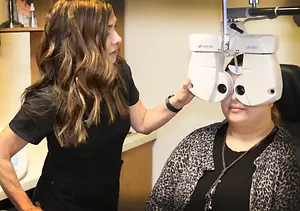
Most adults benefit from an eye exam every one to two years, but the right schedule depends on your age, health history, and risk factors. If you wear contact lenses or eyeglasses, annual exams help keep your prescription accurate and monitor for lens-related complications. Patients with conditions like diabetes, glaucoma, or a family history of eye disease may need to be seen more frequently.
- Children (ages 3 to 18): Before starting school and then annually to monitor for vision changes that affect learning.
- Adults (18 to 64): Every 1 to 2 years, or annually for contact lens wearers.
- Adults 65 and up: Annually, as the risk of cataracts, glaucoma, macular degeneration, and diabetic eye disease increases.
- High-risk patients: As recommended by your eye doctor; some conditions call for exams every 3 to 6 months.
Specialized Eye Exams We Offer
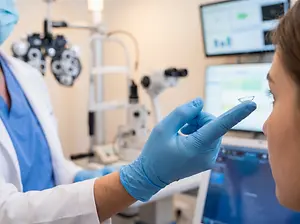
A contact lens exam goes beyond updating your prescription. We evaluate the fit and health of your cornea, assess tear film quality, and determine the best lens type for your eyes, including specialty options like scleral lenses. Learn more about our contact lens fittings.
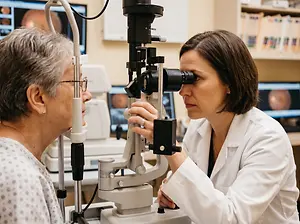
Diabetes can cause changes inside the eye long before any symptoms appear. Our diabetic eye exams use retinal imaging and OCT to screen for diabetic retinopathy and macular edema. Regular monitoring is essential for protecting your vision if you have diabetes or pre-diabetes.
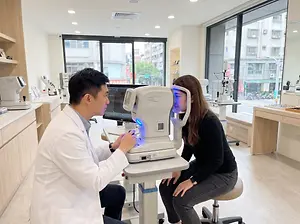
Dry eye is one of the most common and underdiagnosed eye conditions. Our evaluations examine the quality and quantity of your tear film, meibomian gland function, and ocular surface health. We then build a personalized treatment plan. Learn more about our dry eye evaluation.
Book an Eye Exam in Centennial
Protect your vision with a medical eye exam. We care for patients across Centennial, Greenwood Village, Lone Tree, Cherry Creek, the Denver Tech Center, and Highlands Ranch.
Planning your visit? See our hours and location for directions and hours.